Steam Cleaning vs. Dry Carpet Cleaning: An Honest Comparison
Hot-water extraction, encapsulation, bonnet cleaning and dry powder all have a place. Here's what each actually does, how long it takes to dry, and which one your carpet needs.
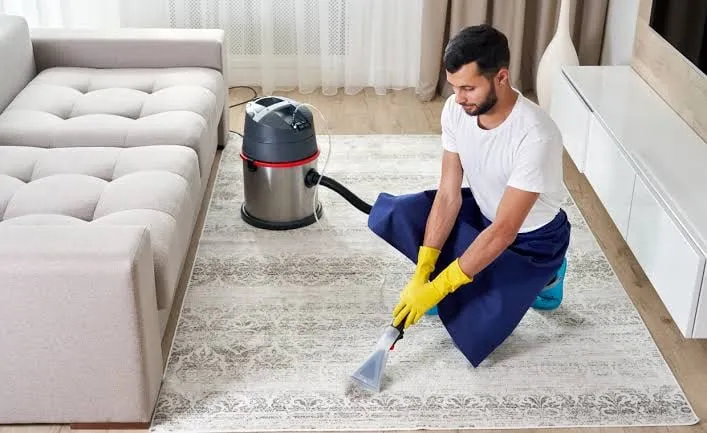
“Do you do steam cleaning or dry cleaning?” is a question that comes up a lot, usually from someone who’s been told one of them is a scam. Neither is. They’re different tools for different jobs, and the useful question is which one your carpet needs right now.
Hot-water extraction (“steam cleaning”)
Despite the name, there’s no actual steam. Hot water and a cleaning solution are sprayed into the carpet under pressure and immediately vacuumed back out, along with the soil that’s been loosened. Good technicians pre-treat first and agitate the carpet before the rinse.
Strengths: It’s the deepest clean available for most residential carpet. It rinses soil, oils, allergens and residue out of the carpet instead of leaving them behind, and it’s the method most carpet manufacturers recommend (and often require for warranties).
Weaknesses: Longer dry times, usually 4 to 8 hours. If it’s done badly (too much water, weak extraction, no rinse), carpets stay wet too long and can be left with sticky residue.
Best for: Periodic deep cleaning, pet accidents, heavy traffic lanes, move-outs, allergy households.
Encapsulation (low-moisture)
A cleaning solution is applied and worked in with a machine. As it dries, it crystallizes around soil particles, which are vacuumed out over the following days.
Strengths: Very fast drying, often an hour or two. Great for maintaining commercial carpet on a frequent schedule.
Weaknesses: It doesn’t rinse. Heavy soil, oily traffic lanes and pet urine deep in the pad are mostly out of its reach.
Best for: Frequent maintenance cleaning between deep cleans, especially in offices.
Bonnet cleaning
A spinning pad soaked in cleaning solution buffs the top of the carpet, absorbing surface soil into the pad. It’s the “hotel lobby” method.
Strengths: Quick, dries fast, and makes carpet look better in a hurry.
Weaknesses: It’s a surface treatment. It can push soil down rather than removing it, and on some residential carpets the friction can distort the pile.
Best for: Quick appearance touch-ups on low-pile commercial carpet.
Dry compound (powder)
An absorbent powder, lightly dampened with solvent or detergent, is brushed into the carpet, then vacuumed out with the soil it has attracted.
Strengths: Essentially dry, so there’s very little drying time and very little risk for moisture-sensitive carpet.
Weaknesses: Light cleaning only, and fine powder residue can remain in dense carpet if it isn’t vacuumed thoroughly.
Best for: Light refreshes and some sensitive situations.
Side by side
| Method | Cleaning depth | Typical dry time | Removes residue? | Good on pet urine? |
|---|---|---|---|---|
| Hot-water extraction | Deep | 4–8 hours | Yes, it rinses | Yes, with enzyme pre-treatment |
| Encapsulation | Moderate | 1–2 hours | Partly | Limited |
| Bonnet | Surface | 1–2 hours | No | No |
| Dry compound | Light | Under 1 hour | Mostly | No |
So which one should you get?
For most homes in Los Angeles, the answer is hot-water extraction once or twice a year, done properly, with a good pre-treatment and a thorough rinse. If you have pets, kids or allergies, it’s the method that actually reaches what’s causing the problem. Low-moisture methods are fine for quick freshening in between, but they aren’t a substitute.
What we do
Our carpet cleaning is hot-water extraction, with the steps that make it work: dry soil removal first, a pre-treatment matched to the fiber, agitation, a slow rinse with strong extraction, and grooming and airflow so it dries in hours, not days. For upholstery, we choose between low-moisture extraction and solvent cleaning depending on the fabric code. More on that in our guide to upholstery cleaning codes.
Wondering what it costs? Here’s our breakdown of carpet cleaning prices in Los Angeles. Or just ask for a quote or call (213) 317-6137.

Written by the LA Carpet Cleaning Company crew, a Valley-based team that cleans carpet, upholstery and tile & grout in homes across Los Angeles. More about us.