Pet Urine in Carpet: What Actually Works (and What Makes It Worse)
Why urine smell keeps coming back, what to do in the first ten minutes, which home remedies backfire, and when a professional clean (or new pad) is the real fix.
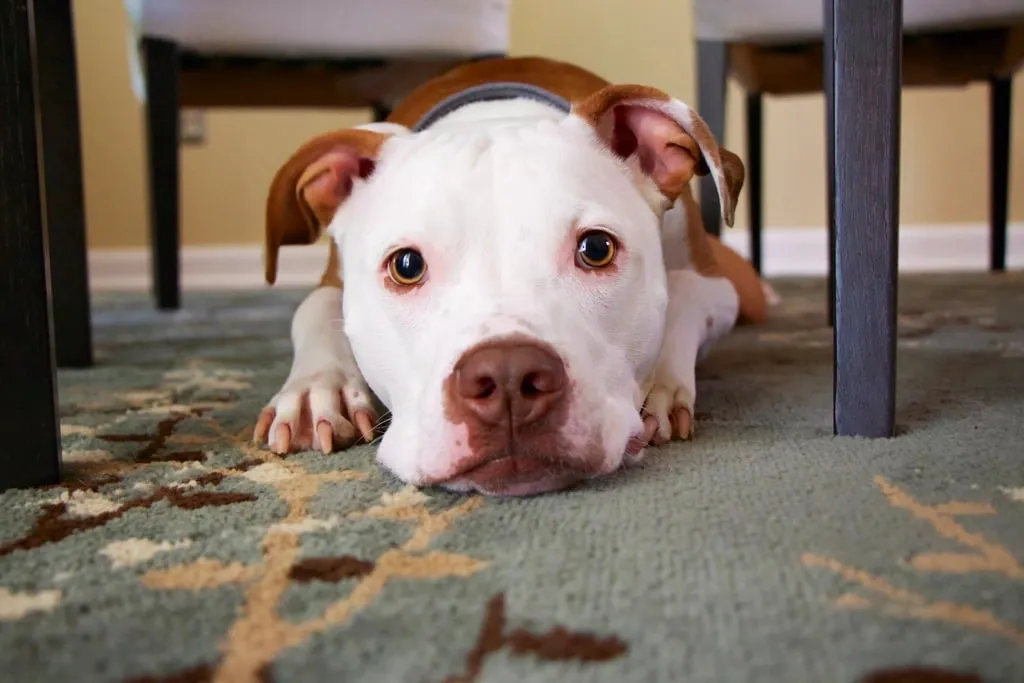
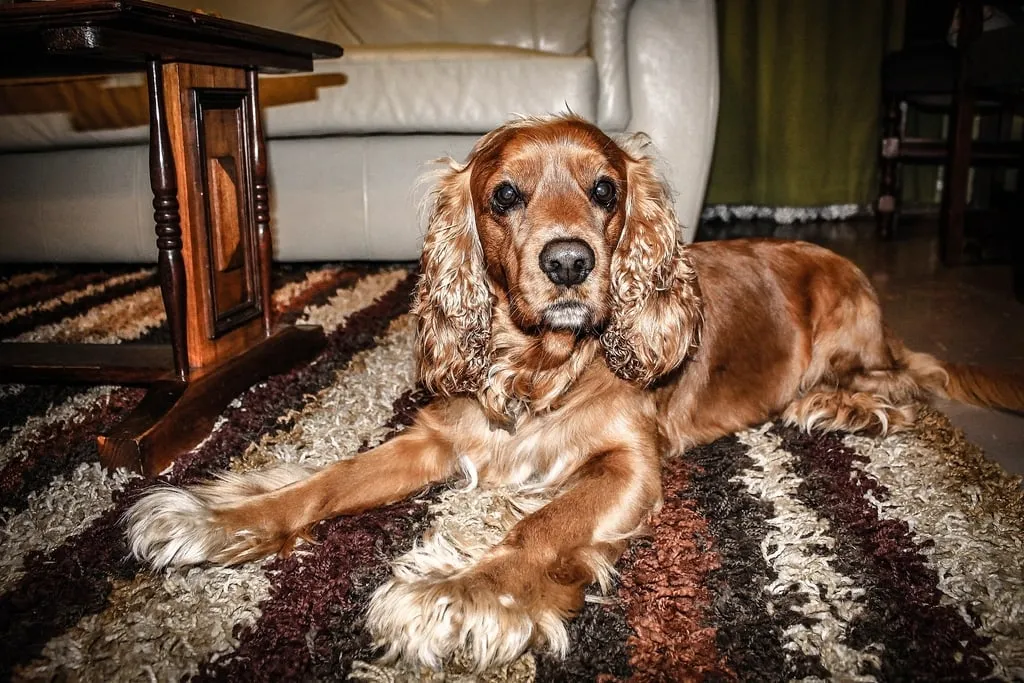
We love dogs. We also know exactly what a dog that’s been holding it during a long workday can do to a hallway runner. If you’re reading this with paper towels in one hand, skip to the next section. Otherwise, start with why this is so stubborn, because that explains everything else.
Why the smell keeps coming back
Fresh urine is mostly water, urea and salts. As it dries, bacteria break the urea down and release ammonia (that sharp smell), and the uric acid left behind forms tiny salt crystals that cling to fibers, backing and pad. Those crystals don’t dissolve easily in plain water, and they hold on to odor.
That’s why a spot can seem fine for weeks and then smell again on a humid day. Moisture in the air reactivates the residue. It’s also why your dog keeps going back to the same spot: they can smell it long after you can’t.
And here’s the part most people don’t realize: the visible spot on top is usually much smaller than the wet area underneath. Urine spreads out in the pad like ink on a paper towel.
The first ten minutes
If you catch it fresh, you can prevent most of the damage.
- Blot, don’t rub. Stand on a thick stack of paper towels or an old towel to press the liquid up out of the carpet. Swap and repeat until almost nothing comes up.
- Rinse with cool water. Pour a small amount of cool water on the spot and blot again. You’re diluting what’s left.
- Use an enzyme cleaner. Enzyme products are made to break down the compounds in urine instead of masking them. Follow the label, especially the dwell time. Enzymes need time (and need to stay damp) to work.
- Let it dry naturally. Cover it with a dry towel and a book if you need to keep pets off.
Home remedies that backfire
Heat on a fresh spot
Hot water, a steam mop or a hair dryer on fresh urine can help bond the odor compounds to the fibers. Cool water first.
Lots of vinegar or baking soda
Vinegar can neutralize some ammonia smell temporarily, and baking soda absorbs some odor. Neither removes the uric acid salts, and over-wetting the spot pushes urine deeper into the pad. Baking soda left in the carpet also leaves a gritty residue.
Ammonia-based cleaners
Ammonia smells like urine to a dog, which can encourage them to mark the same spot again.
Scented sprays
Fragrance covers odor for a few hours. The source is still there.
Scrubbing hard
It frays the fibers, spreads the spot and drives liquid down into the backing.
When it’s time for a professional
Call someone if:
- The smell is coming from an area rather than one spot.
- It comes back on humid days or when the heat is on.
- The pet has been using the same area for a while.
- You’re moving out of a rental and want it handled properly.
Here’s what a proper pet treatment looks like, the way we do it on our carpet cleaning jobs:
- Find every spot. A UV light shows dried urine that you can’t see in daylight, and a moisture check shows how far it has spread under the surface.
- Treat with enzymes. Applied generously enough to reach where the urine went, not just the top of the pile, and given time to work.
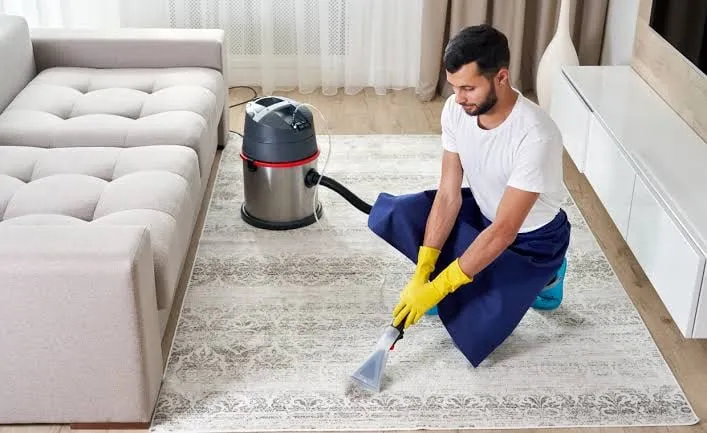
- Extract. Hot-water extraction rinses the broken-down residue out of the carpet instead of leaving it to dry back in.
- Deodorize at the source if needed, then rinse and dry.
The honest part: when cleaning isn’t enough
If urine has soaked through the carpet and pad into the subfloor, which is common in a favorite corner that has been used for months, cleaning the carpet will improve things but won’t fully remove the odor. The real fix is to lift the carpet, replace that section of pad, and seal the subfloor. That’s a flooring job, not a cleaning job.
We’d rather tell you that up front than charge you for a treatment that can’t win. If that’s what we find, we’ll say so and explain your options.
Upholstery is a similar story
Urine on a sofa follows the same chemistry, with one complication: foam cushions soak it up like a sponge. The fabric can be cleaned, but if urine has gone deep into the foam, the insert often needs replacing. More on that on our upholstery cleaning page.
Preventing repeat visits
Once the spot is truly clean, the dog is much less likely to go back to it, because they can’t smell it anymore. Beyond that: more frequent walks for older dogs, a vet check if accidents start suddenly (they can signal a medical issue), and a washable runner in the spot they like most.
Whether it’s a busy family home in Thousand Oaks or a hillside house in Los Feliz, pet treatment is a regular part of our work. Request a quote or call (213) 317-6137, and tell us roughly where the spots are and how long they’ve been there.

Written by the LA Carpet Cleaning Company crew, a Valley-based team that cleans carpet, upholstery and tile & grout in homes across Los Angeles. More about us.